
QTC conducts Field Environmental Measurements—including Ambient Air Quality, Environmental Noise, Stack Emissions, and Continuous Monitoring Stations—providing reliable data that helps you understand your site’s actual environmental conditions, support permit and project requirements, and take the right action before indicators develop into regulatory or operational risks.
Measurement instruments operated in accordance with U.S. Environmental Protection Agency (EPA) methodologies
Field teams remain on site for the full monitoring period—up to 24 continuous hours
Experience on major and sensitive projects across Saudi Arabia
Review-ready Technical Reports that support consultants and project owners
Projects across electricity, infrastructure, major tourism destinations, cultural developments, and nature reserves—showing the challenge, QTC’s role, and the value delivered to the client.
One of the most common issues for facilities is confusing these two pathways. Identifying the correct one from the outset avoids unnecessary measurement costs and ensures the report serves the authority or party to which it will be submitted.
Monitoring the workplace inside the facility: Is the operating environment safe for workers, and will the readings support the upcoming audit file?
Typically required by manufacturers and exporters before management system audits (ISO) and Occupational Health and Safety reviews, and to protect workers from hazards that cannot be seen.
Review Measurement RequirementsMeasuring the environment around the facility or project: What is released from your site into its surroundings, and what are the surrounding air quality and noise levels?
Typically required for Environmental Impact Assessment Studies, Environmental Permit requirements, major-project specifications, and project-owner requirements.
Review Measurement RequirementsEach service below is delivered under a scope defined after reviewing your activity, project stage, and the requirements of the authority or party receiving the report.
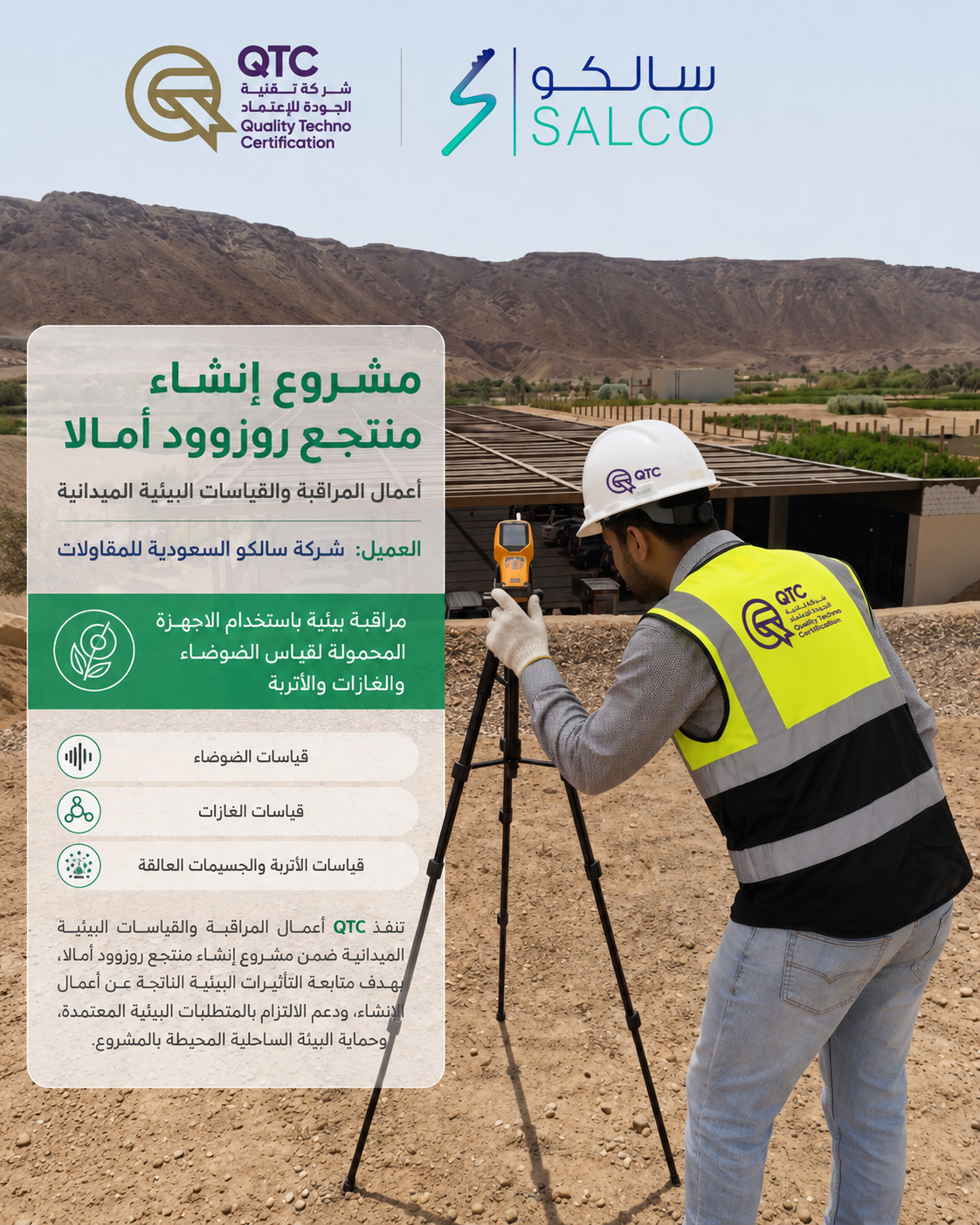
Measurement of Particulate Matter (PM10 / PM2.5), gases, and noise around the facility or project using qualified portable instruments, with monitoring periods of up to 24 hours per Measurement Point.
From a single 24-hour location to multi-point Periodic Monitoring programs using Class 1 (A) instruments, including Reverberation and Acoustic Insulation studies for sensitive buildings.
Measurement of gases from Stationary Sources (CO, NOx, SO₂, and oxygen percentage) using TESTO 350 to assess combustion efficiency and compare emissions against the Permissible Limits.
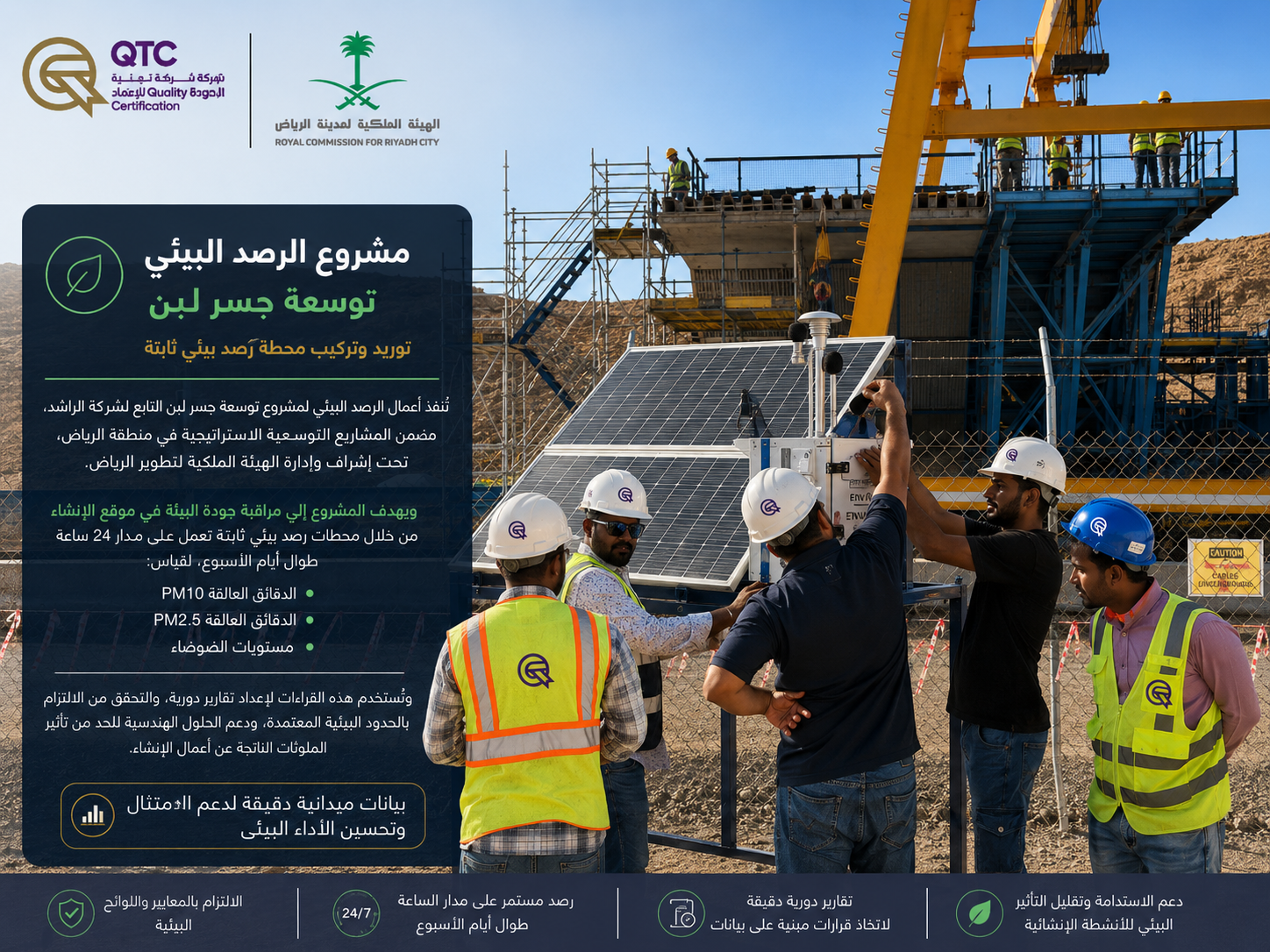
Stations operating 24/7 to monitor PM10, PM2.5, and noise levels, with Periodic Reports supporting Engineering Mitigation Measures throughout the project lifecycle.
A mobile monitoring unit with qualified sensors covering a wide area and measuring on site: PM10, PM2.5, SO₂, H₂S, NOx, CO, O₃, and CH₄—suited to sites with high environmental risk.
Measurement of gases, Particulate Matter (PM10), and Occupational Noise within operational areas to assess workplace safety and support management-system audit files and Occupational Health and Safety requirements.
Environmental Measurements are not a paperwork exercise. When performed too late, under an unsuitable scope, or at incorrect locations and times, the results may not reflect actual site conditions—exposing the project to several risks:
Incomplete measurements or measurements that do not follow approved methodologies may increase the likelihood of regulatory observations and weaken the facility’s position before Regulatory Authorities.
A report based on weak readings may require repeat measurements and reports—adding time and cost and delaying permits and project stages.
Some pollutants are colorless and odorless. Without reliable field measurements, exceedances may only become apparent after a complaint, inspection, or harm to workers and the surrounding environment.
We implement measurement and monitoring programs for the following sectors across Saudi Arabia, based on each project’s scope:
We use qualified instruments operated in accordance with U.S. Environmental Protection Agency (EPA) methodologies and Saudi Regulatory Requirements—because a report based on an unapproved methodology may not be accepted.
When a Measurement Point requires 24-hour monitoring, our team remains on site for the full 24 hours. Complete-period readings provide data that reflects reality—not a snapshot that could mislead decisions.
We have delivered measurement and monitoring work for major projects—from Saudi Electricity Company sites to projects supervised by the Royal Commission for Riyadh City and AMAALA destination projects on the Red Sea.
We supply, install, operate, and maintain Fixed Environmental Monitoring Stations that run around the clock—a capability not available from many Spot Measurement providers.
Under specialist engineering supervision, we go beyond delivering figures: the Technical Report identifies problem locations and potential sources, helping the consultant and facility owner select the right Corrective Actions.
We have delivered large measurement programs covering dozens of concurrent sites with 24-hour monitoring at each location within a compressed timeframe—supported by a field operations room and precise resource management.
We review your activity, project stage, the authority or party receiving the report, and any existing permit or Scope of Work.
We identify the measurements actually required, the Monitoring Locations, durations, and suitable conditions—no more and no less.
A qualified team using approved instruments remains on site throughout the monitoring period and collects readings and samples in accordance with the specified methodology.
We review the results against applicable requirements and deliver a Technical Report identifying observations and recommendations for remediation or follow-up monitoring.
For Stack Emissions Measurements from Stationary Sources: CO, NOx, SO₂, and oxygen percentage. It has been used on major operational projects, including Saudi Electricity Company sites.
Portable Measurement — Stationary SourcesInstruments qualified in accordance with EPA methodologies for measuring Particulate Matter in Ambient Air Quality and workplace environments, with monitoring periods of up to 24–48 hours per location.
Portable Measurement — External and WorkplaceFor Environmental Noise and Occupational Noise levels, extended 24-hour measurements, multi-location Periodic Monitoring programs, and building Reverberation studies.
Portable Measurement — Spot and PeriodicFixed Environmental Monitoring Stations operating 24/7 with qualified sensors (supply, installation, operation, and maintenance), plus a mobile monitoring unit that measures multiple pollutants simultaneously across large sites.
Continuous Monitoring — 24/7The scope depends on the activity type, project classification, location, stage (pre-construction, construction, or operation), pollution sources, and the requirements of the project owner and Regulatory Authorities. There is no single answer for every project, so we begin with a complimentary initial technical review to identify what is actually required before any commitment.
External measurements assess the environment surrounding the facility (Ambient Air Quality, Environmental Noise, and Stack Emissions) and are generally linked to environmental studies and permits. Workplace monitoring assesses conditions inside the facility (gases, Particulate Matter, and Occupational Noise) and is linked to worker safety and management-system audits. Selecting the correct pathway from the outset avoids unnecessary measurement costs.
Portable instruments are used for Spot Measurements or Periodic Monitoring over defined periods, such as 24 hours per location, and suit studies and assessments. Fixed stations operate continuously throughout the project and track changes in real time, making them suitable for long-term construction projects and sites subject to Continuous Monitoring requirements.
When the supervising authority or project owner requires Continuous Monitoring of the construction site, as on major infrastructure projects; when a facility needs real-time tracking of specific pollutants during operation; or when continuous documentation is needed to support Periodic Reports and engineering decisions.
Based on site conditions, pollution sources, and applicable requirements. For ambient measurements, locations are generally distributed around the site perimeter to reflect impact directions, while duration—such as 24 hours for Particulate Matter—is determined by the approved methodology for each measurement type. All details are documented in the Scope of Work before execution.
It measures gases emitted from Stationary Sources: carbon monoxide CO, nitrogen oxides NOx, sulfur dioxide SO₂, and oxygen percentage—key indicators for assessing combustion efficiency and compliance with Emission Limits.
It depends on the purpose. For an environmental study or permit, Ambient Air Quality—Particulate Matter and gases—is often required alongside noise. For a specific noise complaint or Acoustic Insulation study, a purpose-designed noise measurement program may be sufficient. The initial technical review determines the appropriate scope.
Readings are documented as recorded in the Technical Report—data integrity is fundamental to our work—together with potential exceedance locations and sources, and technical recommendations that help the consultant and facility owner implement Corrective Actions before the indicators become observations or violations.
A site description; measurement scope, locations, and durations; instruments and methodologies used; readings and results; comparison with applicable limits and requirements; identified observations and potential sources; and technical recommendations for remediation or follow-up monitoring.
The activity or project type, location (city), project stage, required service or measurements, and any existing permit or Scope of Work, if available. The clearer the information, the more accurate and timely the quotation. Documents can be attached directly using the form below.
Send us your project details. Our technical team will review them and identify the appropriate measurements for your site—before any financial commitment.
Your data will only be used to contact you about this request and will not be shared with any third party.